Indian Markets Extend Losing Streak Amid Global Geopolitical and Trade Pressures
According to Rediff, India’s two benchmark indices closed lower for a fifth straight session: the BSE Sensex fell 331.62 points, or 0.43%, to 76,059.77, while the NSE Nifty lost 102.15 points, or 0.43%, to 23,767.45.
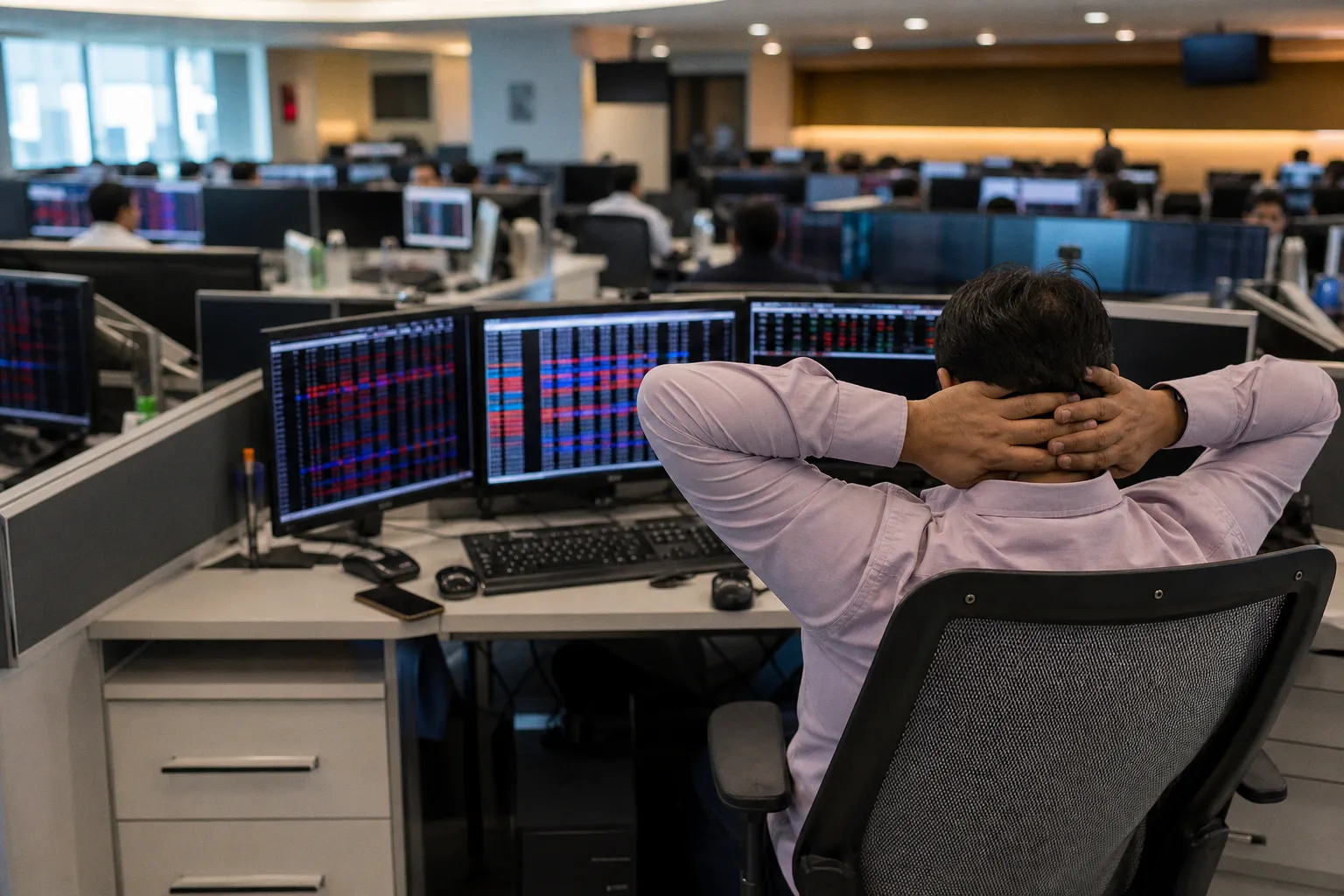
The immediate inputs were clear: renewed concern over US tariffs, tensions in West Asia, higher oil prices and foreign fund outflows. This was a broad risk-off session, not a clean single-sector repricing.
The tape: downside persisted, but intraday stress was larger
The closing loss understated the session’s range. Sensex was down as much as 916.96 points, or 1.20%, during trading before recovering part of the decline.
Key session data:
- Sensex: 76,059.77, down 331.62 points.
- Nifty: 23,767.45, down 102.15 points.
- Brent crude: down 3.66% to $96.98 a barrel after exceeding $100 in the prior session.
- Foreign institutional investors sold equities worth Rs 2,999.23 crore on Thursday, according to exchange data.
Selling hit several large-cap names, including Eternal, Mahindra & Mahindra, Bajaj Finance, Bharti Airtel, Asian Paints and Infosys. Infosys fell 1% after narrowing the upper end of its full-year revenue-growth forecast to 1.5%–3%, citing continued macroeconomic uncertainty. HCL Tech, ITC, Axis Bank and Tata Consultancy Services closed higher.
That split matters. Index weakness was broad enough to extend the losing streak, but not uniform enough to indicate indiscriminate liquidation across every large-cap segment.
Oil, tariffs and foreign flows: three inputs, one risk premium
The market is processing overlapping risks rather than a single domestic earnings event. West Asia tensions lifted the oil-price variable. US tariff concerns added pressure to export-sensitive economies. Foreign outflows weakened the marginal bid for Indian equities.
Asian markets supplied no offset. South Korea’s KOSPI dropped 5.72%, while Japan’s Nikkei 225, Shanghai’s SSE Composite and Hong Kong’s Hang Seng also ended lower, according to Rediff.
For equity and ETF investors, the usable signal is not the headline point loss. It is the combination of crude near $100, external trade uncertainty and foreign selling. Each factor can affect valuations independently; together, they compress tolerance for expensive, growth-sensitive exposures. Technology stocks are particularly exposed when tariff concerns translate into weaker growth expectations, while a sustained high oil price can pressure broader macro indicators.
Portfolio test: no all-clear from the rebound
Brent’s decline to $96.98 provided some relief after the prior session’s move above $100. It did not remove the oil-risk input. Likewise, the intraday recovery in Sensex reduced the day’s closing loss but did not interrupt the five-session decline.
The data support a narrow conclusion:
- Pass: diversification remains visible; selected large-cap stocks finished higher.
- Fail: the benchmark trend remains negative, foreign flows are negative, and the macro risk premium has not cleared.
The current read is fail for treating the session as a completed reset. Watch crude, foreign fund flows and whether tariff concerns continue to pressure technology-heavy and export-linked equity exposure.