Global Investors Remain Bullish on Gulf Economy
If you've been wondering whether the recent headlines about regional tensions mean it's time to rethink your exposure to emerging markets, a new survey of global investors offers a clear, data-backed perspective.
Confidence is Broad-Based, Not a Fluke
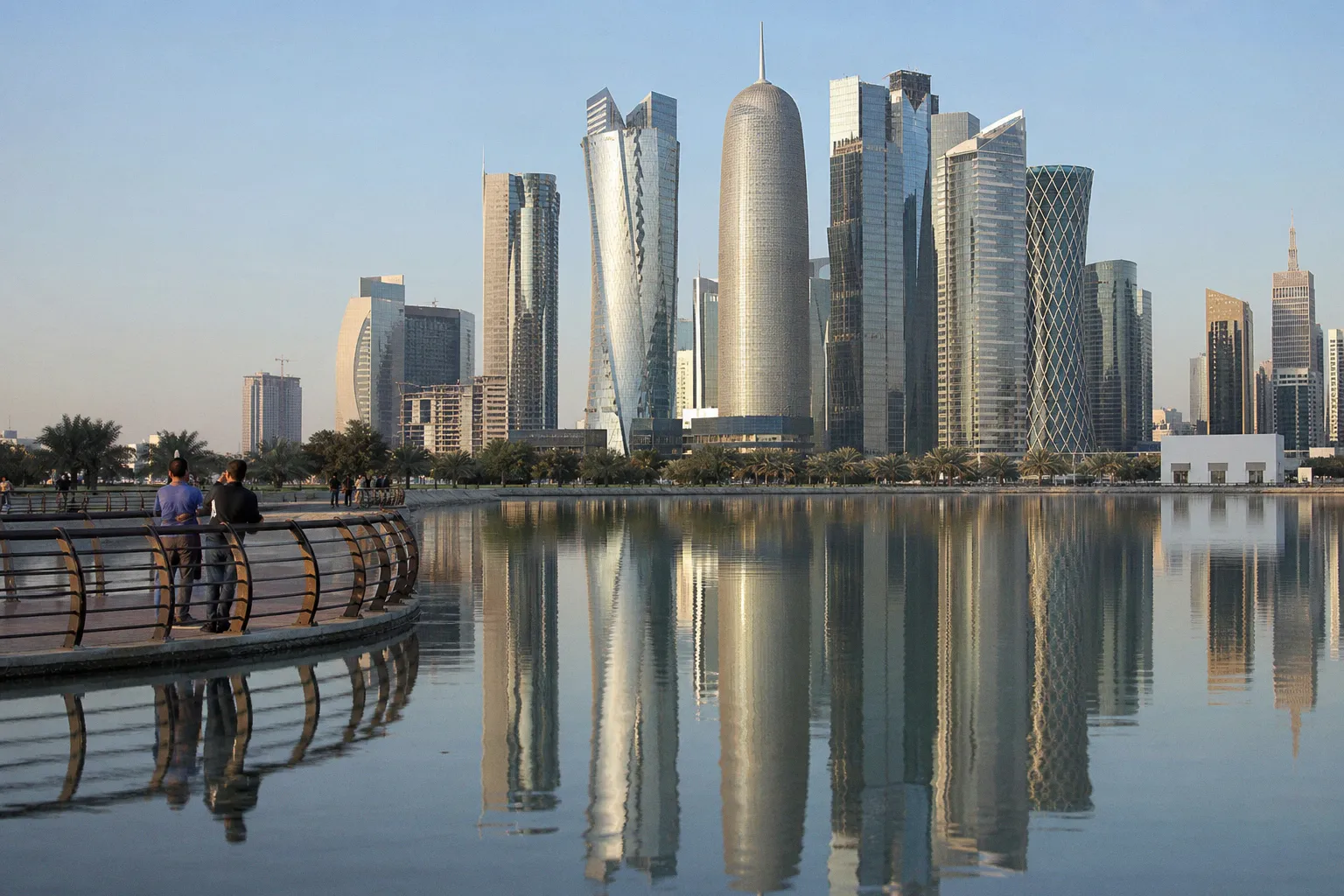
The bullish sentiment isn't coming from a single source. The survey, which polled over 2,000 investors across the US, UK, Germany, France, and China, found that confidence was highest in China at 91%, with the US and UK both at 84%. Even in the more cautious European markets of Germany and France, the figures were a robust 80% and 71%, respectively. When 69% of respondents describe the Gulf as a "good" or "great" place to do business, it points to a fundamental shift in how global capital perceives the region's stability and opportunity. For us, this means the institutional "smart money" is not hitting the exit door.
Geopolitical Noise vs. Long-Term Conviction
A key part of maintaining investment discipline is separating short-term noise from long-term structural trends. This survey directly addresses that. While headlines focus on conflict, 71% of investors expect the US/Israel–Iran situation to end in a negotiated settlement. Furthermore, they believe the Gulf nations themselves should play an active role in facilitating peace. This aligns with a separate May 2026 survey of Gulf residents, where over 90% expressed confidence in their own national economic direction. The takeaway is a shared belief, both inside and outside the region, that the economic engine is decoupled from the immediate political volatility. When I allocate capital, this kind of dual-source confidence—a bullish external investor view coupled with strong local optimism—is a powerful indicator I weigh heavily.
Translating Confidence into Portfolio Action
So, what does this mean for your asset allocation? First, it reinforces the case for diversified emerging market exposure, where Gulf economies play a meaningful role. Second, it underscores the importance of looking beyond short-term geopolitical risk premiums. If you have a long time horizon, this data suggests that a strategic, not tactical, allocation to the region is warranted. The practical next step is to review your emerging market fund or ETF holdings. Check the fund's prospectus and country breakdown to understand your current exposure to GCC nations (like Saudi Arabia, UAE, Qatar, Bahrain). If you're underweight and your risk profile allows, this sustained investor confidence might be a signal to consider a modest increase through a broad EM fund or a dedicated frontier/Gulf markets ETF. Remember, the goal is to build a resilient portfolio for the long term, not to react to every wave of market sentiment.