Fed likely to 'stay put' on rates in 2026 after hot inflation data
The Federal Reserve held its benchmark rate at the 3.50%–3.75% range on June 17, with Chairman Kevin Warsh describing the decision as "unanimous and unambiguous." The hold comes after May CPI spiked…
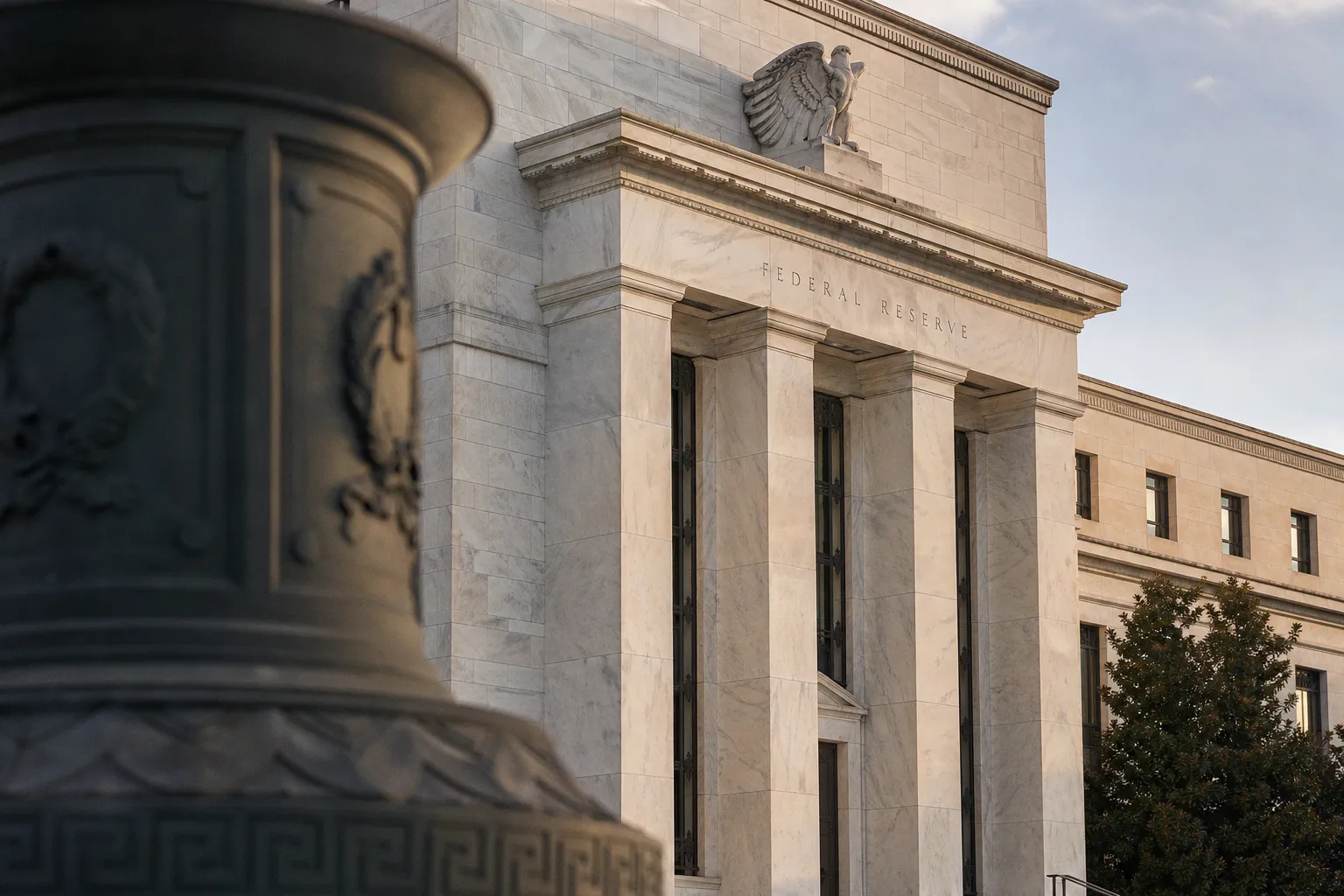
Fed Rate Lock: Benchmark Holds at 3.50–3.75% as Inflation Reaccelerates to 4.2%
The Federal Reserve held its benchmark rate at the 3.50%–3.75% range on June 17, with Chairman Kevin Warsh describing the decision as "unanimous and unambiguous." The hold comes after May CPI spiked to 4.2% — the highest print since 2023 and a full 220 basis points above the Fed's 2% target. Rate-cut expectations for 2026 are effectively dead. For equity and fixed-income allocators, this is a regime-shift signal: the easing cycle that began in late 2025 has stalled.
Mortgage Rate Compression Has Flatlined
The rate passthrough is visible in housing finance. The 30-year fixed mortgage averaged 6.48% as of June 24 (Bankrate survey) and 6.49% per Freddie Mac's June 25 reading — essentially unchanged week-over-week. Rates had touched a 2026 low of 6.09% earlier this year on Fed-cut momentum. That window closed. The spread between the Fed funds rate and the 30-year fixed has widened back to roughly 275–300 bps, reflecting bond market repricing of persistent inflation risk.
The driver: oil price surges tied to the Iran conflict feeding directly into headline CPI. This is supply-side inflation — the type the Fed historically cannot cut through.
Housing Equities Under Dual Pressure
The macro setup for residential real estate names is deteriorating on two vectors. Median existing-home price hit $429,300 in May — an all-time monthly high — yet national home price appreciation slowed to 0.7% year-over-year, the weakest reading since 2011 when prices actually declined 3.9% (S&P Case-Shiller). Record nominal prices plus record-low real appreciation is a textbook affordability trap. Volume compresses before price does.
For equity investors with exposure to homebuilders, mortgage REITs, or housing-adjacent industrials, the data point to sustained margin pressure. Demand destruction from elevated financing costs is no longer a forecast — it is the current print.
What We're Watching
The next catalyst is the Personal Consumption Expenditures (PCE) report due Friday. Economist Denise McManus of APEX flagged it bluntly: the Fed's 2% target is "in another ZIP code." If PCE confirms the May CPI trend, the "higher for longer" narrative hardens further. Our read: no cuts in 2026 absent a sharp labor market deterioration. Position accordingly — duration risk in fixed-income portfolios remains unhedged for a scenario that is now the base case.
Other news
 IMF chief economist says Fed reduction in rate guidance is 'entirely appropriate'
 AI and semiconductors drive a new resource race reshaping global economies
 Multinationals Driving Growth Amid Global Fragmentation in 2026 - News and Statistics
 Developed Market Equity Funds Set New Weekly Inflow Record